
Ready-to-Hunt Compound Bow Packages: What Features to Look For
Adjustability, sight, rest and quiver quality: the checklist for picking an RTH package you will not outgrow in a season.
Better Outdoors is reader-supported. When you buy through our Amazon links we may earn a commission, at no extra cost to you. Learn more.
Key Takeaways
- The best ready to hunt compound bow packages are the ones that fit your draw length and leave room to grow, not the ones with the longest accessory list.
- Check draw length and draw weight range first, then axle-to-axle length, brace height and let-off.
- Accessory quality varies: look at the sight pins, rest type, quiver, stabilizer, peep and D-loop before you buy.
- An RTH bow comes factory-equipped; a dealer-built package is assembled and tuned by a shop; a bare bow lets you pick every part.
- Mathews bows are usually dealer-packaged, while brands such as Bear sell factory RTH models.
Ready to hunt compound bow packages promise a simple deal: one box, one price, and a bow that’s set up with the accessories you need to start shooting. For a new archer, that’s a huge head start. But not every package is equal, and the difference between a bow you love for years and one you outgrow in a season usually comes down to a handful of features.
This Better Outdoors guide isn’t a ranked list built on made-up test scores. It’s a buying checklist. You’ll learn what to look for in an RTH bow, how factory, dealer-built and bare-bow options compare, and how real packages we’ve already reviewed stack up on paper.
Try the free Bow Finder QuizSix questions to match you with the right bow.What Is a Ready to Hunt Compound Bow Package?
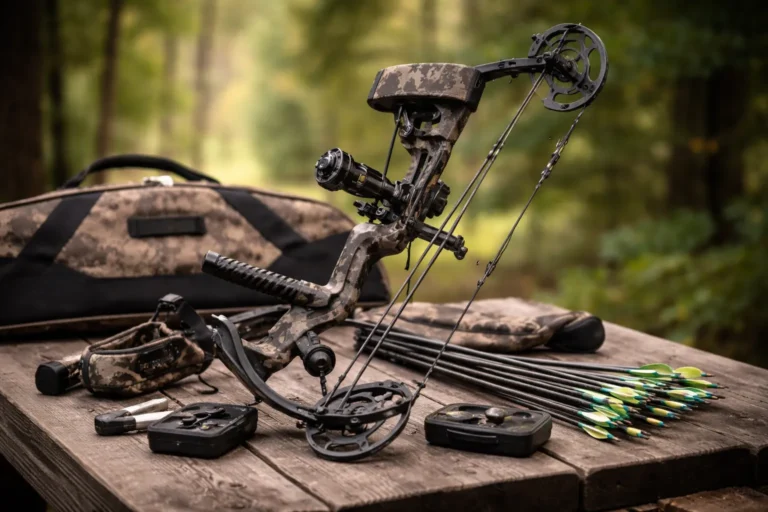
A ready-to-hunt (RTH) package is a compound bow sold with its core accessories already included and, in most cases, installed. A typical RTH bow ships with:
- A multi-pin sight
- An arrow rest, often a full-containment style
- A bow-mounted quiver
- A short stabilizer
- A peep sight served into the string
- A D-loop for your release
What you usually still need: arrows, field points, broadheads, a release aid and a target. Some retailers bundle arrows; most don’t. Read the listing carefully so you know what’s in the box.
Beginner Compound Bow Package Checklist: Features That Matter
So, what features should you look for in a beginner compound bow package? Start with the bow itself, because accessories are easy to upgrade later and the bow is not. Use this checklist as you compare listings.
| Feature | What to look for | Why it matters |
|---|---|---|
| Draw length range | A range that covers your measured draw length with room on either side | A bow that can’t fit your draw length will never shoot well |
| Draw weight range | Adjustable range that starts where you are comfortable today | Lets you build strength without buying a new bow |
| Axle-to-axle length | Roughly 30–33 inches suits most hunting | Shorter is handier in blinds; longer is steadier to aim |
| Brace height | Around 6 inches or more for forgiveness | Longer brace height is more forgiving of form errors |
| Let-off | About 75–90%, ideally adjustable | Higher let-off means less weight to hold while you wait for a shot |
| Sight pin count | Three to five pins for most hunting | Covers common distances without clutter |
| Rest type | Containment rest for simplicity, drop-away for clearance | Affects reliability and broadhead flight |
| Quiver | Detachable, holds your hunting arrows securely | Quiet arrow storage and lighter bow when removed |
| Stabilizer | Short hunting stabilizer with dampening | Balance and less hand shock |
| Peep and D-loop | Peep installed at your height; loop tied to fit | Consistent anchor and clean release |
Draw Length and Draw Weight Adjustability
This is the most important line on the spec sheet. Measure your draw length before you shop, and make sure the bow’s range covers it comfortably. If you’re still growing, or buying for a teen, a wider range is worth more than any accessory. Learn how module changes work in our guide on how to adjust draw length.
Draw weight matters just as much. Many adult hunting bows come in two peak ranges, such as 45–60 lb or 55–70 lb. A beginner who isn’t sure should usually pick the lower range, because you can shoot it comfortably now with good form. Check your state’s bowhunting regulations for any minimum draw weight.
Try the free Draw Length CalculatorEstimate your draw length from wingspan or height.Axle-to-Axle, Brace Height and Let-Off
Axle-to-axle (ATA) length affects maneuverability and steadiness. Treestand and ground blind hunters often like something in the low 30s. Brace height is the distance from the grip to the string at rest. A brace height around 6 to 7 inches is generally more forgiving than the short-brace speed bows, which helps new shooters.
Let-off is the percentage of peak weight that drops off at full draw. With 80% let-off on a 60-lb bow, you hold about 12 lb. Some cams allow you to change let-off with the draw stop, which is a nice bonus.
Sight, Rest, Quiver and Stabilizer
Package accessories are where manufacturers save money, so look closely:
- Sight: Look for fiber optic pins, a level and micro-adjustment if possible. Three to five pins handle most whitetail distances.
- Rest: Full-containment rests are quiet and nearly foolproof for beginners. Drop-away rests offer more clearance but need careful timing.
- Quiver: It should hold arrows tightly without rattling and detach easily for stand hunting.
- Stabilizer: A short hunting stabilizer adds balance and soaks up vibration. It doesn’t need to be fancy.
RTH Bow vs. Dealer-Built Package vs. Bare Bow
There are three ways to end up with a hunting-ready compound bow. Each has a place.
| Option | What you get | Best for | Watch out for |
|---|---|---|---|
| Factory RTH bow | Bow plus manufacturer-chosen accessories in one box | Beginners and budget-minded hunters | Entry-level accessories; still needs tuning |
| Dealer-built package | Bow plus shop-selected accessories, fitted and tuned | Shooters who want a pro setup from day one | Contents and pricing vary by shop |
| Bare bow | Bow only; you choose every accessory | Experienced archers with specific preferences | Usually costs more and takes more setup |
A factory RTH bow is the simplest way in. A dealer-built package often delivers the best result for a new shooter because the shop measures your draw length, sets the bow, installs the peep at your height and paper-tunes it. A bare bow suits archers who already know which sight and rest they want.
Mathews Ready to Hunt Bow Packages
If you’re searching for Mathews ready to hunt bow packages, know that Mathews sells through authorized dealers, and most Mathews packages are assembled at the shop level rather than shipped as a factory RTH box. That means accessories and pricing vary from one shop to the next. Our guide to Mathews compound bow packages explains what a dealer package typically includes and how to compare them.
Ready to Hunt Compound Bow Packages We’ve Reviewed
Here are two factory RTH packages Better Outdoors has already covered in full reviews. They’re examples of how to read a spec sheet against the checklist, not a ranked list.
| Spec | Bear Alaskan XT RTH | Bear Whitetail Maxx RTH |
|---|---|---|
| IBO speed | 335 fps | Up to 339 fps |
| Axle-to-axle | 33" | 31" |
| Brace height | 6.25" | 6.5" |
| Draw length | 25"–30" | 26"–30" |
| Draw weight | 45–60 lb or 55–70 lb | 45–60 lb or 55–70 lb |
| Let-off | 80% | Up to 90% (some listings say 80%) |
Bear Alaskan XT RTH
The Alaskan XT pairs a 33-inch axle-to-axle length with a 6.25-inch brace height and a 335 fps IBO rating. On the checklist, that’s a steady, forgiving hunting frame with a draw length range of 25 to 30 inches, which covers a lot of adult shooters. Read the full Bear Alaskan XT RTH review for details on the cam and the package.
Bear Whitetail Maxx RTH
The Whitetail Maxx is shorter at 31 inches axle-to-axle, with a 6.5-inch brace height and up to 339 fps. Its 26- to 30-inch draw length range suits adults with a settled draw length. The compact frame makes sense for treestands and blinds. Its package includes a 4-pin sight, a containment-style rest and a quiver, per our review. Because let-off listings disagree, confirm the setting for the bow you buy.
What to Add to Any RTH Bow
Even the best ready to hunt bow package leaves a few essentials to you:
- A release aid. A wrist-strap index finger release is the most common choice for new bowhunters.
- Arrows matched to your setup. Spine depends on draw weight and draw length; a shop can help you choose.
- A target. A bag target for field points and a foam block for broadhead practice.
- A case. A padded compound bow case protects the sight and cams in the truck.
What to add to a ready-to-hunt package
Wrist-Strap Release Aid
The one accessory almost no RTH package includes. A wrist-strap release is easy to learn and hard to lose in the woods.
- Consistent release
- Adjustable length
Bag Target
Lets you practice daily with field points and sight in your new pins at home.
- Easy arrow removal
- Portable
Padded Bow Case
Keeps your sight, rest and cams from getting knocked out of tune in transport.
- Protects your setup
- Extra storage for accessories
As an Amazon Associate, Better Outdoors earns from qualifying purchases.
How to Choose the Best Ready to Hunt Bow Package for You
- Measure your draw length. Everything else depends on it.
- Pick a draw weight range you can draw smoothly while seated today.
- Decide on size. Treestand and blind hunters often prefer a shorter ATA; open-country hunters can go longer.
- Check brace height and let-off for forgiveness and comfortable holding.
- Review the accessory list and note what you would upgrade first.
- Plan for setup. Budget for a pro shop to check the peep, tune and help you sight in.
At Better Outdoors we recommend shooting a bow at a shop before buying whenever you can. Feel matters as much as numbers.
Final Thoughts on Ready to Hunt Compound Bow Packages
A good RTH package gets you hunting fast without guessing at accessories. Focus on fit first: draw length range, draw weight, ATA and brace height. Then judge the sight, rest and quiver. Pick the right bow, and upgrades can come later as your skills grow.
Frequently Asked Questions
What features should I look for in a beginner compound bow package?
Look for a draw length range that covers your measurement, an adjustable draw weight range that starts where you are comfortable, a forgiving brace height around 6 inches or more, 75 to 90 percent let-off, a 3- to 5-pin sight, a containment rest, a quiver, a stabilizer, and an installed peep and D-loop.
What does RTH mean on a compound bow?
RTH stands for Ready To Hunt. An RTH bow ships with core accessories such as a sight, rest, quiver, stabilizer, peep and D-loop, so you mainly need arrows, a release and a target.
Are ready to hunt compound bow packages good for beginners?
Yes. They are often the simplest and most cost-effective way to start, as long as the bow fits your draw length and draw weight. You can upgrade accessories later.
What is the best ready to hunt bow package?
The best package is the one that fits you. Compare draw length range, draw weight, axle-to-axle length, brace height and let-off first, then accessory quality. Our bow finder can help narrow the choice.
Does Mathews sell ready to hunt bow packages?
Mathews bows are sold through authorized dealers, and most Mathews packages are assembled and tuned by the shop. Contents vary, so compare packages dealer by dealer.
Is a dealer-built package better than a factory RTH bow?
A dealer-built package often includes professional fitting and tuning, which helps new shooters. A factory RTH bow is usually simpler to buy. Either can work well if the bow fits you.
What do I still need after buying an RTH bow?
Most RTH bows do not include a release aid, arrows, broadheads or a target. Plan for those, plus a case for transport.
Do RTH bows need tuning?
Yes. Even a factory-equipped bow benefits from a pro shop check of draw length, peep height, rest alignment and sight-in before you hunt.

We are bowhunters and gear nerds who test, tune and shoot the equipment we write about. Every Better Outdoors guide is checked against manufacturer specs and updated as models change. How we review gear.
Related Articles
 Bow Guides
Mathews Compound Bow Packages: What You Get and Who They Fit
Sight, rest, quiver, stabilizer: what a Mathews package really includes, what it costs versus a bare bow, and who should buy one.
 Bow Tuning
How to Adjust Draw Length on a Compound Bow
Measure, identify your cam, move the modules and re-tune: a brand-neutral guide to adjusting draw length the right way.
 Bow Reviews
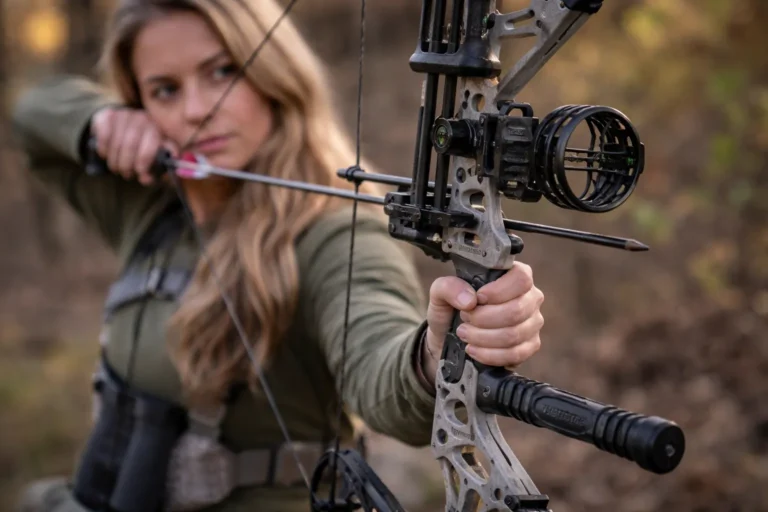
Mathews Prima Level 1 Package: Specs, Review, and Who It Fits
Full Mathews Prima specs, what the Level 1 package adds, and why this short-draw bow is a favorite for women and smaller-framed hunters.